
Designers
Fashion designers whose work spans multiple brands — bios, signature work, brand affiliations.
Jonathan Anderson
4 brandsNorthern Irish designer Jonathan Anderson studied menswear at the London College of Fashion and founded JW Anderson in 2008, where his gender-fluid silhouettes and craft-driven knitwear made him a critical darling. LVMH took a stake in 2013 and the same year installed him as creative director of Loewe, where his eleven-year tenure transformed the Spanish leather house into a culture-led platform — Puzzle bag, Loewe Craft Prize, surreal trompe-l'œil collections, and a string of Best Designer awards. He stepped down from Loewe in March 2025. In April 2025 LVMH named him artistic director of Dior Men, then in June 2025 expanded the appointment to oversee Dior womenswear, menswear and haute couture — making him the first sole creative director of Dior since Monsieur Dior himself.
Massimo Osti
4 brandsBorn in Baricella, Bologna in 1944, Massimo Osti trained as a graphic designer before pivoting into clothing in the early 1970s. He founded Chester Perry in 1971 (renamed C.P. Company in 1978), pioneering garment-dyeing, screen printing and decoupage techniques drawn from military, workwear and sportswear archives. In 1982 he launched Stone Island as a sister label, debuting with a revolutionary reversible truck-tarp fabric and the iconic compass patch. Across three decades he also created Boneville and Left Hand, and his research-driven approach effectively defined Italian sportswear. Osti died in 2005; his archives continue to inspire labels from Supreme to NikeLab.
Raf Simons
4 brandsBorn in Neerpelt, Belgium, Raf Simons trained as an industrial designer before being mentored by Walter Van Beirendonck. He launched Raf Simons menswear in 1995, defining a youth-cult, post-punk silhouette that influenced two decades of menswear. He served as creative director of Jil Sander (2005-2012), where he restored the German minimalist house's commercial footing; of Dior (2012-2015), where his three-year run delivered the cult Dior couture book and reframed haute couture for the Instagram era; and of Calvin Klein 205W39NYC (2016-2018), an Americana art-collab project that won every CFDA award but was cut short by Calvin Klein Inc. In 2020 he became co-creative director of Prada alongside Miuccia Prada — a rare dual-leadership model. He closed his namesake label in 2022 to focus on Prada.
Demna
3 brandsDemna Gvasalia was born in Sukhumi, Georgia, fled the civil war as a child, and graduated from Antwerp's Royal Academy in 2006. After stints at Maison Margiela and Louis Vuitton under Nicolas Ghesquière, he co-founded the collective Vetements in 2014, whose oversized DHL tees and reworked hoodies forced post-Soviet streetwear into the luxury mainstream. In 2015 Kering installed him as creative director of Balenciaga, where for a decade he turned Cristóbal's silhouettes into the language of internet-era subversion — Triple S sneakers, IKEA-bag totes, viral couture. Demna presented his final Balenciaga collection in March 2025 and was named artistic director of Gucci in March 2025, succeeding Sabato De Sarno, with his debut for the Florentine house slated for September 2025.
Dohun Kim
3 brandsBorn in Gwangju in southwest Korea, Dohun Kim founded Andersson Bell in Seoul in 2014, building the brand around a Korean-Scandinavian duality — the surname Andersson nodding to Sweden, Bell evoking the Buddhist temple bells of his childhood. From a Hongdae studio he expanded the label from colourful knitwear into a full ready-to-wear offering, gaining global traction when BTS wore Andersson Bell sneakers at the Grammys. In 2023 he became one of the first Korean designers to join the official Milan Fashion Week calendar, anchoring a roster that now includes the main line, Andersson Bell Heritage and the Andersson Bell Studio capsule.
Glenn Martens
3 brandsBorn in Bruges in 1983, Glenn Martens studied interior design before pivoting to fashion at the Royal Academy of Antwerp, graduating in 2008. After stints at Jean Paul Gaultier and Bruno Pieters, he was appointed creative director of Y/Project in 2013, reviving the avant-garde Paris label with conceptual draping, distorted tailoring, and trompe-l'œil denim until the house closed in 2024. In 2020 he took on creative direction of Diesel, where his pixel-distorted logos, devoré tailoring, and inclusive casting reignited the Italian denim giant for a Gen Z audience. He delivered an acclaimed Maison Margiela Artisanal couture show in 2025 before being named creative director of the full Margiela house, succeeding John Galliano.
John Galliano
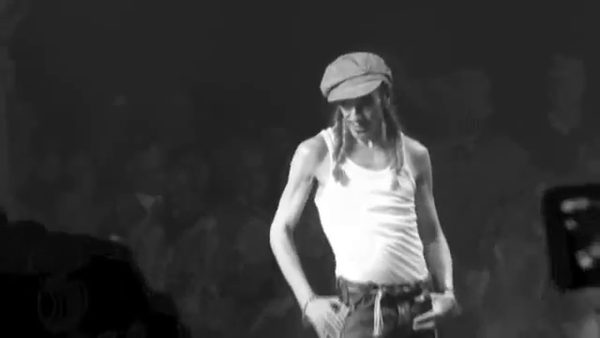
3 brandsBorn in Gibraltar to a Spanish-Italian mother and English father, John Galliano was raised in South London and graduated from Central Saint Martins in 1984. His graduation collection 'Les Incroyables' was bought wholesale by Browns and launched his eponymous label. Bernard Arnault recruited him to Givenchy in 1995 — the first British designer to lead a French couture house — then moved him to Dior in 1996, where for fifteen years he produced some of the most theatrical couture of the modern era: Maasai, geisha, surrealist Marie Antoinette. A 2011 antisemitic incident in Paris led to his dismissal from both Dior and his own label. After rehab and a Maison Margiela apprenticeship under Renzo Rosso, he returned in 2014 as creative director of Maison Margiela, reviving its 'Artisanal' couture franchise. He left Margiela in late 2024. His three-decade arc remains the modern industry's most charged study in genius and downfall.
Kim Jones
3 brandsBorn in London and raised partly in East Africa, Kim Jones graduated from Central Saint Martins in 2002 and was named menswear style director at Louis Vuitton in 2011. Over seven years he turned LV menswear into a streetwear-luxury hybrid, peaking with the 2017 Supreme x Louis Vuitton collaboration that broke the wall between hype and heritage. In 2018 he moved to Dior as artistic director of Dior Men, where his seven-year run staged spectacle shows in Miami, Tokyo and Giza and forged collaborations with KAWS, Daniel Arsham, Travis Scott, Stüssy and ERL. He also held the womenswear director role at Fendi from 2020 to 2024, paying tribute to Karl Lagerfeld's 54-year Fendi legacy. He exited Dior Men in January 2025 and remains one of the most influential connector-designers between luxury and youth culture.
Maria Grazia Chiuri
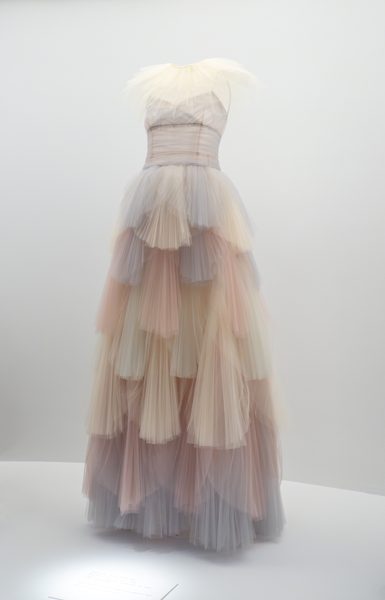
3 brandsBorn in Rome, Maria Grazia Chiuri studied at the European Design Institute and built her career in the Italian accessories trade, joining Fendi and then Valentino, where she designed bestselling bags including the Rockstud. In 2008 she was named co-creative director of Valentino alongside her longtime partner Pierpaolo Piccioli, after Valentino Garavani's retirement. Their joint eight-year tenure restored Valentino's couture credibility through pre-Raphaelite romanticism and the Rockstud commercial juggernaut. In July 2016 LVMH named Chiuri creative director of Dior women's collections — the first woman to lead the house in its 70-year history. Over nine years she infused Dior with overt feminist messaging ('We Should All Be Feminists' tees), collaborative artist scenography, and a renewed Bar jacket. She left Dior in 2025 ahead of Jonathan Anderson's takeover.
Martin Margiela
3 brandsBorn in Genk and trained at Antwerp's Royal Academy of Fine Arts a year ahead of the Antwerp Six, Martin Margiela assisted Jean Paul Gaultier in Paris from 1984 before founding Maison Martin Margiela with Jenny Meirens in 1988. His debut collections introduced the blank white label with numbers, the four-stitch tag and the deconstructive vocabulary of exposed seams, oversized tailoring, Tabi boots and Replica garments. Across two decades he expanded the house into a numbered line system, including the artisanal Line 0/10 menswear and Line 6 womenswear (later MM6). He stepped away from the brand around 2008 without public farewell, leaving behind one of the most influential conceptual practices in modern fashion.
Mike Carroll
3 brandsA pioneering San Francisco street skater who turned pro for Plan B in the early 1990s and reset the template for technical, low-impact ledge skating, Mike Carroll co-founded Girl Skateboards with Rick Howard, Spike Jonze and Megan Baltimore in 1993 after departing Plan B. The pair followed in 1994 with Chocolate Skateboards as Girl's sister company, and in 1999 launched Lakai Limited Footwear to bring skater-built shoes to the same family of brands. Carroll's understated style and corporate stewardship of the Crailtap umbrella have made him one of the most quietly influential figures in modern skateboarding.
NIGO
3 brandsBorn Tomoaki Nagao in Maebashi, Gunma, NIGO studied at Bunka Fashion College alongside Jun Takahashi before launching A Bathing Ape in Harajuku in 1993. Building Ape into the defining Tokyo streetwear label of the 1990s and 2000s through camo motifs, the Bapesta sneaker and shark hoodies, he expanded the universe with the diffusion line AAPE BY *A BATHING APE in 2005. After exiting Bape in 2011, he co-founded Human Made with a focus on Americana craft and vintage-derived workwear, and in 2021 was appointed artistic director of Kenzo, becoming the first Japanese designer to lead the LVMH-owned Parisian house.
Rick Howard
3 brandsBorn in Vancouver in 1972, Rick Howard moved to California at seventeen and turned pro for Blockhead in 1989 before joining Mike Carroll on the seminal Plan B team, where his switch-stance technical skating in Virtual Reality reshaped the discipline. In 1993, with Spike Jonze, Carroll and Megan Baltimore, he co-founded Girl Skateboards in Los Angeles, soon spinning off sister brand Chocolate Skateboards. In 1999 Howard and Carroll launched Lakai Limited Footwear, completing a skater-owned constellation under the Crailtap umbrella that produced landmark videos like Yeah Right and Pretty Sweet. He was inducted into the Skateboarding Hall of Fame in 2023.
Tom Ford
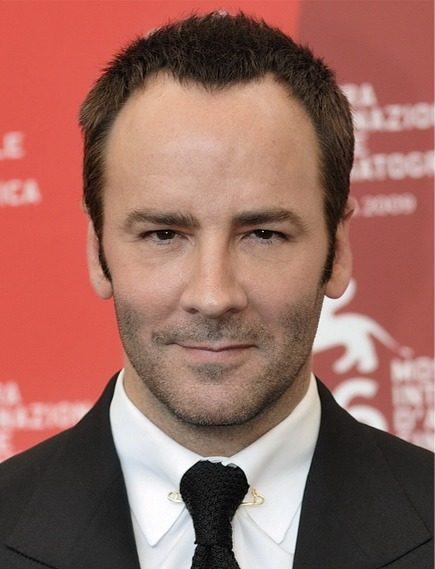
3 brandsBorn in Austin, Texas and trained at Parsons, Tom Ford joined Gucci in 1990 as womenswear designer and was promoted to creative director in 1994. Over the next decade he resurrected the bankrupt Florentine house with hyper-sexualised glamour — velvet hipsters, satin shirts, the white halter dress — turning Gucci into a multi-billion-dollar engine and, after the 1999 YSL acquisition, taking on Saint Laurent Rive Gauche from 2000. He left both houses in 2004 after a power struggle with PPR. In 2005 he launched Tom Ford as a men's tailoring and beauty house, expanded to women's in 2010, directed two feature films (A Single Man, Nocturnal Animals), and sold the company to Estée Lauder in 2022 for $2.8B — staying on as creative until 2023. He remains the textbook case of the designer-as-CEO.
Alastair Rae
2 brandsAlastair Rae met co-founder James Shaw in their first year halls at Manchester Metropolitan University, where the pair bonded over a shared frustration at the lack of well-made, unbranded British menswear. They launched Albam in 2006 with a deliberately small capsule — a great white tee, a knit, a raincoat — made by Midlands artisans in traditional British fabrics. The brand grew into a quietly influential workwear-leaning label with shops in London, and Rae has continued to expand the Albam universe with Albam UK as a heritage-anchored sub-line, working with the same network of small British factories he sourced for the original collection.
Alberto Aspesi
2 brandsBorn in Gallarate, Lombardy in 1944, Alberto Aspesi founded A&D – Camiceria Aspesi in 1969 as a shirt manufacturer, with a leopard-print men's shirt as the very first piece. Through the 1970s he built Aspesi into a reference point for Italian ready-to-wear by championing fabric research and a quietly utilitarian elegance, collaborating with designers including Franco Moschino, Walter Albini and Marco Zanini. He is most associated with introducing the quilted nylon down jacket as everyday outerwear rather than performance gear — the puffy Michelin-style silhouette that became Italian fashion shorthand. Aspesi re-acquired the brand in 2013 before its sale to private equity Armònia in 2017.
Alessandro Michele
2 brandsBorn in Rome in 1972 to a costume-designer mother and Alitalia-engineer father, Alessandro Michele trained at the Accademia di Costume e di Moda before joining Fendi under Karl Lagerfeld and moving to Gucci in 2002. After a decade in accessories and ready-to-wear, he was unexpectedly elevated to creative director in 2015, where his maximalist, gender-fluid, antique-strewn vision — pussy-bow blouses, Princetown loafers, gardenia embroidery — drove Gucci to record growth and reshaped the 2010s luxury lexicon. He stepped down in 2022, and was appointed creative director of Valentino in 2024, succeeding Pierpaolo Piccioli. His debut Pavillon des Folies couture and ready-to-wear collections continued his romantic, narrative-led signature within Valentino's atelier codes.
Alexander Wang
2 brandsBorn in San Francisco to Taiwanese-American parents, Alexander Wang dropped out of Parsons after two years and launched his label in 2007 with a knitwear capsule. His downtown-cool New York aesthetic — model-off-duty leather, slouchy tailoring, the Rocco studded bag — made him CFDA Womenswear Designer of the Year in 2010 at age 26. In 2012 Kering appointed him creative director of Balenciaga, where his three-year tenure modernised the house's accessories before he was succeeded by Demna in 2015. Wang returned full-time to his own brand, which weathered #MeToo allegations in 2020 and pivoted to direct-to-consumer drops and Asia-led activations. He remains one of the most commercially successful designers of his generation.
Alexandre Mattiussi
2 brandsBorn in Normandy in 1980, Alexandre Mattiussi arrived in Paris at seventeen to study at École Duperré, specialising in menswear. He served his apprenticeship at Dior Homme on the 30 Montaigne line, then as first assistant in menswear at Givenchy, and later at Marc Jacobs, where he realised he could no longer afford the cashmere he was designing. In 2011 he founded AMI Paris — ami meaning friend — as an accessibly priced, effortlessly Parisian menswear label that has since grown into a global ready-to-wear house with womenswear, leather goods and a flagship retail network. He won the ANDAM Grand Prize in 2013 and chairs its jury for 2026.
Anthony Vaccarello
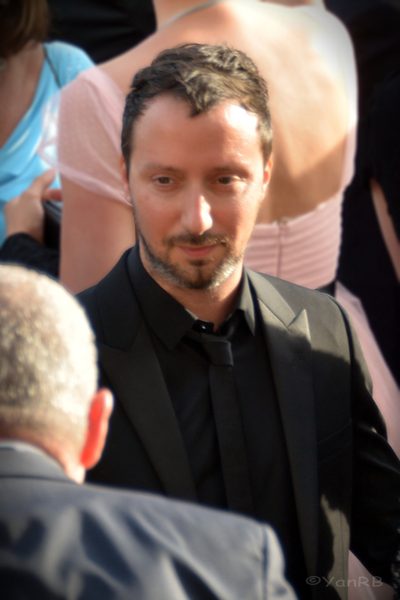
2 brandsBorn in Brussels to Italian parents, Anthony Vaccarello graduated from La Cambre in 2006 and won the Hyères Festival's Grand Jury Prize. He launched his eponymous Paris label in 2009, famed for sharp slashed jersey dresses and an unapologetic body-conscious silhouette. In 2014 Donatella Versace appointed him creative director of Versus Versace, the diffusion line, where his minimalist provocation reset the sub-brand's relevance. In April 2016 Kering installed him as creative director of Saint Laurent, succeeding Hedi Slimane. His near-decade tenure has consolidated YSL's smoking jacket, oversized blazer and razor-thin silhouette into one of the most consistent commercial brand identities in luxury, alongside a high-profile film-production arm (Saint Laurent Productions) launched in 2023.
Aurélien Arbet
2 brandsA Paris-based designer and photographer trained at the Institut Français de la Mode, Aurélien Arbet co-founded Études Studio in 2012 with Jérémie Egry and José Lamali as a hybrid menswear label and publishing house. The studio's early identity was built around limited-edition photo books made with artists such as Ari Marcopoulos and Jason Dill, paired with a graphic-led wardrobe of relaxed tailoring, workwear and printed jersey. Showing on the official Paris men's calendar, Études grew into one of the city's most consistent independent menswear houses, expanding into womenswear and accessories while keeping its founding link between contemporary art publishing and clothing intact.
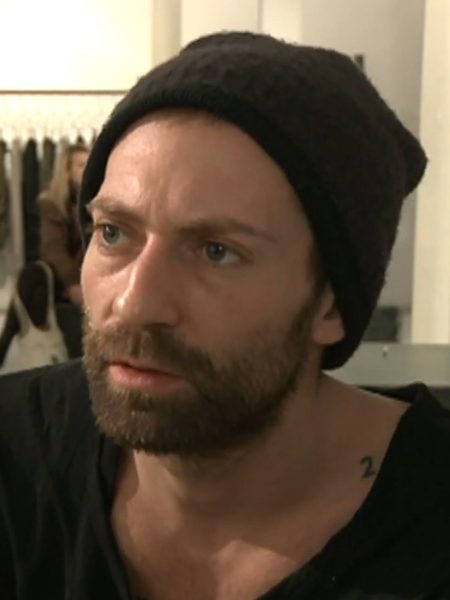
Boris Bidjan Saberi
2 brandsBorn in Munich to a German mother and Iranian father, Boris Bidjan Saberi trained at ESDi in Barcelona, where he has been based since. He launched his eponymous menswear line in 2008 with a Paris debut, building a singular practice around hand-dyed leather, anatomical pattern-cutting, ritualistic finishing and a hardware language of horn and steel. His main collection is produced almost entirely in Spain under near-couture conditions and numbered by piece. In 2011 he introduced the diffusion line 11 by Boris Bidjan Saberi for a sharper, sportswear-leaning silhouette, extending the studio's vocabulary of dark, technical garments grounded in craft.
Charaf Tajer
2 brandsOf Moroccan descent and raised in Paris's tenth arrondissement, Charaf Tajer is a self-taught designer whose CV reads as a tour of late-2010s fashion subculture: co-founder of streetwear label Pigalle, of the Pain au Chokolat collective, and of the influential Le Pompom nightclub, with stints alongside Off-White and Supreme. In 2018 he launched Casablanca, named for the city where his parents met working in a clothing atelier and where he spent childhood summers. The house translates Riviera leisurewear — silk camp shirts, monogrammed terry, courtside knit — into a Parisian luxury vocabulary. He was a 2020 LVMH Prize finalist and 2021 ANDAM finalist.
Daniel Lee
2 brandsBorn in Bradford, Yorkshire, Daniel Lee graduated from Central Saint Martins in 2010 and built his early career inside Phoebe Philo's Céline studio, eventually leading ready-to-wear design. Kering tapped him to succeed Tomas Maier at Bottega Veneta in 2018, where his three-year tenure — Cassette pouch, padded Pouch clutch, square-toe sandals, the 'New Bottega' campaign — re-engineered the Italian house into the most-Instagrammed name in luxury and won him the British Fashion Awards quadruple in 2019. He left Bottega in late 2021 and was named chief creative officer of Burberry in October 2022, where he is steering the British heritage house back to its trench-coat and equestrian-knight DNA after Riccardo Tisci's monogram era.
Eric Swenson
2 brandsBorn in San Francisco in 1946, Eric Swenson never skated himself but became one of the architects of modern skateboarding. In 1978 he co-founded Independent Truck Company with Fausto Vitello, partnering with NHS distribution out of Santa Cruz to produce trucks whose durability quickly made them the discipline's default hardware. In 1981 he and Vitello launched Thrasher Magazine, whose punk-rock attitude and Skate and Destroy ethos drove the second-wave revival of skateboarding through the 1980s and 1990s. Swenson remained chief skateboard designer at Independent and a guiding voice at Thrasher until his death in 2011.
Errolson Hugh
2 brandsBorn in Edmonton in 1971 to Chinese-Jamaican immigrant parents, Errolson Hugh studied fashion design at Ryerson in Toronto before relocating to Munich. In 1994 he and Michaela Sachenbacher founded ACRONYM as a design consultancy, working closely with Burton Snowboards for nearly fourteen years; in 2002 the studio began releasing product under its own name from Berlin, defining the dark, utilitarian aesthetic now known as techwear. Hugh's parallel commissions include Stone Island Shadow Project (2008-2020), where he reinterpreted Stone Island's archive for an urban operator, and Nike's ACG revival from 2014 to 2018. He remains creative director of ACRONYM.
Etsuzo Shitara
2 brandsEtsuzo Shitara established Shinko Shiki Co. (later Shinko Inc.) in Tokyo's Shinjuku ward in 1953 as a cardboard packaging company. After the 1973 oil crisis squeezed the packaging business, an introduction to Americana obsessive Osamu Shigematsu reframed his trajectory: in February 1976 Shitara opened the first Beams in Harajuku, a 20-square-metre shop modelled on a UCLA dorm room and stocked with authentic American goods. The single store grew into a national multi-brand retail empire and in-house labels including Beams Plus, the workwear-leaning menswear line. Shitara is widely credited as a foundational figure in Japan's import-driven fashion culture; his son Yō Shitara now leads the company.
Fausto Vitello
2 brandsBorn in Argentina in 1946 to Italian parents and raised in San Francisco, Fausto Vitello co-founded Ermico Enterprises in the late 1970s and in 1978 launched Independent Truck Company with Richard Novak, Jay Shuirman and Eric Swenson, introducing the geometry that quickly became the industry benchmark for vertical and street skating. In 1981 he and Swenson founded Thrasher Magazine to chronicle skate culture independently of surf media, building it into the most influential skateboarding publication in the world through contests like the SOTY award and the King of the Road series. He remained at the helm of both Independent and Thrasher until his death in 2006, and is regarded as one of the principal architects of American skateboard industry infrastructure.
George Powell
2 brandsAn aerospace engineer trained in mechanical engineering, George Powell began experimenting with skateboard wheels in his garage in the mid-1970s and founded Powell Corporation in Santa Barbara in 1974. In 1978 he partnered with skater and team manager Stacy Peralta to form Powell Peralta, which became the defining skateboard company of the 1980s through the Bones Brigade team of Tony Hawk, Steve Caballero, Lance Mountain and Rodney Mullen, the Vato Rats and Mike Vallely graphics by V.C. Johnson, and the Bones Brigade Video Show. Powell also founded Bones Wheels, the in-house urethane wheel program that grew into an industry standard for street and vert riders alike.
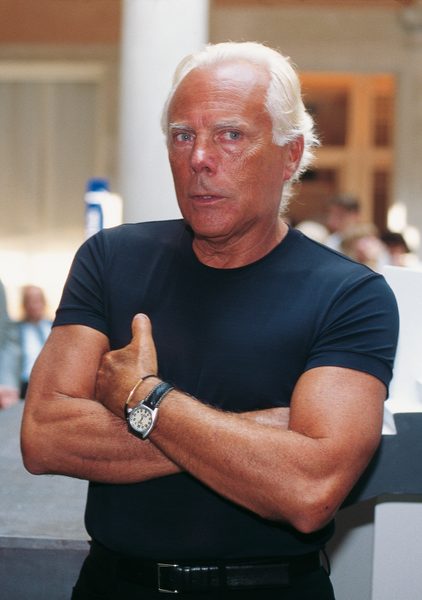
Giorgio Armani
2 brandsBorn in Piacenza in 1934, Giorgio Armani studied medicine before being drafted into the army and then becoming a window dresser at La Rinascente in Milan. After a long tenure as menswear designer for Nino Cerruti through the late 1960s and early 1970s, he founded Giorgio Armani S.p.A. with his partner Sergio Galeotti in 1975. His unstructured tailoring redefined the modern suit for both men and women, and his costuming for American Gigolo in 1980 made him a global figure. He launched the more youthful diffusion line Emporio Armani in 1981, followed by Armani Jeans, Armani Collezioni, Armani Privé haute couture, Armani Casa, hotels and beauty. He led the privately held group as chairman and sole shareholder until his death in 2025.
Gosha Rubchinskiy
2 brandsBorn in Moscow in 1984, Gosha Rubchinskiy worked as a stylist and image-maker in the post-Soviet Russian underground before launching his eponymous menswear line in 2008 with a debut show titled Empire of Evil. Backed by Comme des Garcons through Dover Street Market from 2012, the label became globally visible through its Cyrillic graphics, skate and football references and casting of Russian and Eastern European youth, showing in Florence, Saint Petersburg, Yekaterinburg and Kaliningrad. He paused the main line in 2018 and relaunched his practice in 2019 as GR-Uniforma, a more workwear- and uniform-driven label working out of Saint Petersburg.
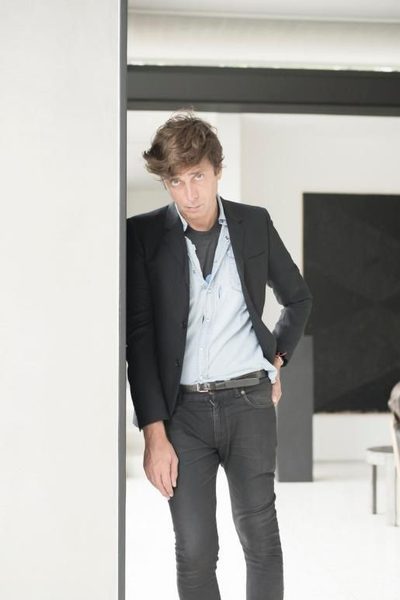
Hedi Slimane
2 brandsBorn in Paris to a Tunisian father and Italian mother, Hedi Slimane studied political science and art history before entering fashion. He joined Yves Saint Laurent in 1996 under Pierre Bergé and launched the YSL Rive Gauche Homme menswear line, then moved to Dior in 2000 as the first creative director of the new Dior Homme, where his ultra-slim silhouette reshaped men's tailoring globally. After a hiatus pursuing photography, he returned in 2012 as creative director of Saint Laurent Paris before being appointed artistic, creative and image director of Celine in 2018, where he extended his rock-and-roll narrative to womenswear and relaunched a full menswear offer under Celine Homme. He departed Celine in late 2024.
Hirofumi Kiyonaga
2 brandsA former selvedge denim and sneaker retail figure in Tokyo, Hirofumi Kiyonaga founded SOPH. in 1998 as a Tokyo-rooted menswear label fusing sportswear codes with Japanese craftsmanship. In 1999 he launched F.C. Real Bristol, the brand's football-inspired offshoot, presenting kits, training pieces and supporter wear as a fictional club whose name nods to Bristol Rovers. The two labels run in parallel through the SOPH. retail network in Japan and have produced sustained collaborations with Nike, Bristol Studio, Stussy and a long-running partnership with Nanamica's GORE-TEX work. Kiyonaga remains creative director, and the FCRB project is widely regarded as the most influential football-streetwear hybrid out of Japan.
Hiroki Nakamura
2 brandsBorn in Kofu, Japan to parents who ran a manufacturing business, Hiroki Nakamura grew up in Tokyo and studied in Alaska, where snowboarding and the natural world shaped his sensibility. He spent eight years as a designer at Burton Snowboards before founding Visvim in Tokyo in 2000–2001, starting with footwear and quickly expanding into a full apparel collection. The label is built on Nakamura's research into vintage Americana, Edo-period Japanese garments, Native American craft and Sámi textile traditions, with hand-dyed and naturally tanned materials assembled by archival techniques. Today he splits his time between Tokyo and Los Angeles, and runs WMV womenswear and the F.I.L. Indigo Camping Trailer travelling shop alongside the main Visvim line.
Hyemee Lee
2 brandsSeoul-based Hyemee Lee initially enrolled at university to study engineering before switching to fashion design over a summer break. She built a career spanning womenswear, menswear, kidswear, textile and accessories before founding EENK in Seoul in 2013, channelling her fascination with print, typography and bookmaking into a distinctively literary fashion language. Eenk's signature is the Letter Project, a long-form runway concept that unfolds collection by collection in alphabetical order from A to Z, framed as an antidote to disposable fashion. The label has shown at Paris Fashion Week multiple times, and Lee oversees both the main line and the more conceptual Eenk Studios.
Isabel Dickson
2 brandsA British accessories specialist with a background in scarves and printed silk, Isabel Dickson co-founded Drake's in London in 1977 alongside Michael Drake, providing the early business with its design and merchandising direction across women's silk squares and men's neckwear. Working out of the brand's Haberdasher Street workshop, she helped establish the house's signature hand-frayed cashmere scarves and the English-made tie programme that supplied many of the leading luxury maisons on a white-label basis. Her role across more than three decades shaped Drake's identity as a London accessories house long before its expansion into shirting, tailoring and ready-to-wear under the Drake's Mayfair flagship.
Isabel Marant
2 brandsBorn in Boulogne-Billancourt to a French father and German mother, Isabel Marant studied at Studio Bercot in Paris and briefly assisted Marc Ascoli and Yohji Yamamoto before launching her first accessories line Twen in 1989. She founded her eponymous house in 1994 with a debut Paris collection of relaxed, ethnographically inflected ready-to-wear that helped define the French bohemian wardrobe of the 1990s and 2000s. In 1999 she added the diffusion line Isabel Marant Etoile, offering a more casual, denim- and jersey-led counterpart at a more accessible price. The two lines remain the backbone of an independent Paris house known for hidden-wedge sneakers, fringed jackets and a consistently lived-in Parisian femininity.
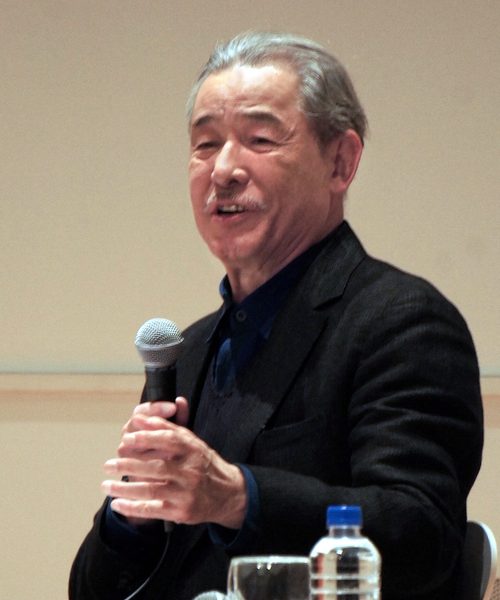
Issey Miyake
2 brandsBorn in Hiroshima in 1938 and a survivor of the atomic bombing, Issey Miyake studied graphic design at Tama Art University before moving to Paris in 1965 to train at the Chambre Syndicale, then assisting Guy Laroche and Hubert de Givenchy. He worked for Geoffrey Beene in New York and returned to Tokyo in 1970 to found the Miyake Design Studio, presenting his first Paris collection in 1973. Across five decades he pursued one-piece-of-cloth construction, computer-controlled pleating with the Pleats Please line, the A-POC project with Dai Fujiwara and, in 2000, the spinoff accessory line BAO BAO ISSEY MIYAKE built on a triangular tessellated mesh. He passed away in 2022, leaving the studio system to continue his research.
James Shaw
2 brandsA British menswear entrepreneur with a background in design and retail, James Shaw co-founded Albam in London in 2006 with Alastair Rae, building the label around well-made, classically detailed British and European menswear staples sourced from small specialist mills and factories. From its first shop on Beak Street in Soho, Albam grew through additional stores in Spitalfields, Islington and Manchester and an Albam UK online presence, with a product line centred on the Fisherman jacket, Welsh-mill knitwear, Portuguese-made tees and English-made shirting. Shaw's editorial-led approach to provenance and process, with each piece tagged by maker and origin, helped establish Albam as a touchstone of the 2000s wave of British heritage menswear.
Jason Dill
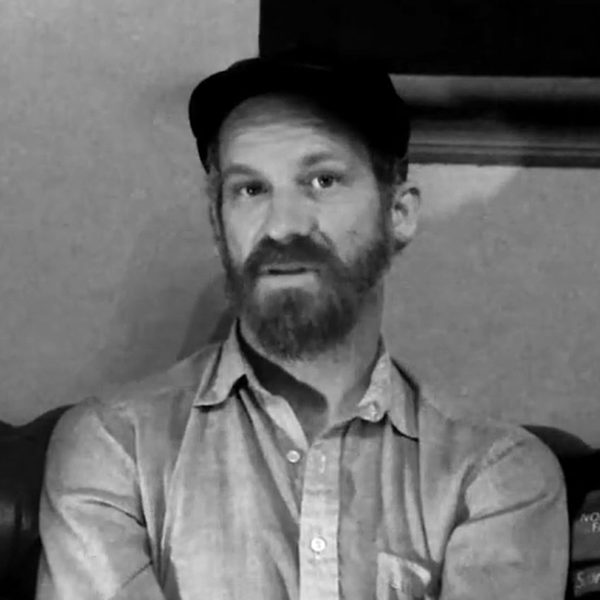
2 brandsBorn in Huntington Beach in 1976, Jason Dill turned pro at twelve, was recruited by Natas Kaupas into the World Industries orbit, and in 1998 joined Alien Workshop, where he spent fifteen formative years as one of the most stylistically influential skaters of his generation. After leaving Alien Workshop in 2013 he co-founded Fucking Awesome in New York with Anthony Van Engelen in 2014, and in 2015 spun off the sister deck brand Hockey to give Van Engelen and Kevin Rodrigues their own platform. The FA/Hockey universe — blending fine-art collage, photography and unapologetic graphic design — reset the visual language of skate hardware in the late 2010s. Dill also published the photo book Prince Street in 2022.
Jay Shuirman
2 brandsAn American skateboard industry pioneer based in Santa Cruz, Jay Shuirman co-founded NHS Inc. in 1973 with Richard Novak and Doug Haut, the parent company behind Santa Cruz Skateboards and one of the longest-running brands in skateboarding. In 1978 he joined Novak, Fausto Vitello and Eric Swenson in founding Independent Truck Company under Ermico Enterprises in San Francisco, designing the truck geometry that became the industry standard. Through the late 1970s and early 1980s he helped steer the rise of Santa Cruz alongside team riders such as Steve Olson and Duane Peters, and was instrumental in laying down the manufacturing backbone of American skateboarding before his early death in 1979.
Jérémie Egry
2 brandsJérémie Egry trained in graphic arts and met collaborator Aurélien Arbet on the Paris graffiti scene in the late 1990s. The pair built a creative practice across publishing and clothing — first through projects Je Suis Une Bande de Jeunes and Hixsept — before founding Études in 2012 with José Lamali, structured as a fashion label, an art-book publishing house and a creative agency all at once. From the Marais flagship Egry helms the Paris operation while Arbet runs the Brooklyn studio, anchoring a Paris-New York axis that places photography, graphic design and menswear on the same shelf. Études Studio remains a regular fixture on the Paris Fashion Week men's schedule.
Jeremy Hull
2 brandsJeremy Hull co-founded Drake's in London in 1977 alongside Michael Drake and Isabel Dickson, the three having met as colleagues at British outerwear house Aquascutum. Hull served as export sales director, and the original collection was a focused range of men's scarves before the firm grew into the East London-based handmade tie and pocket-square maker now synonymous with English neckwear and updated heritage menswear. After leaving Drake's, Hull worked with Spanish department store El Corte Inglés and Italian tailoring brand Belvest; Drake's flagship in Mayfair remains the public face of the house he helped establish nearly half a century ago.
Jerry Lorenzo
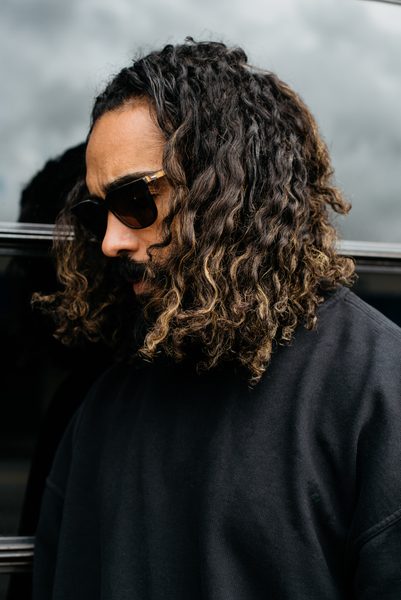
2 brandsJerry Lorenzo Manuel Jr. was born in Sacramento in 1977, son of MLB manager Jerry Manuel. After a degree from Florida A&M and an MBA at Loyola Chicago, he managed corporate sponsorships for the LA Dodgers and styled ballplayer Matt Kemp before founding Fear of God in Los Angeles in 2011 with a $14,000 budget and no formal training. The brand's elongated tees and oversized flannels caught the attention of Kanye West and Justin Bieber, defining the late-2010s elevated streetwear aesthetic. In 2018 he launched the lower-priced sister line Fear of God Essentials, and has since built a multi-year adidas Athletics partnership, growing FOG into one of the few US-founded luxury brands with global resonance.
Jim Thiebaud
2 brandsA San Francisco professional skateboarder who rode for Powell Peralta and Real in the late 1980s, Jim Thiebaud co-founded Real Skateboards in 1991 with Tommy Guerrero under the Deluxe Distribution umbrella set up by Fausto Vitello and Eric Swenson, anchoring it in a Bay Area street-skating ethos and a culture of pro models, graphics and giving back to riders. In 1987 the same Deluxe family had launched Spitfire Wheels, of which Thiebaud became a key figure as the brand grew alongside Real to become the dominant urethane wheel program in skateboarding. He remains an active partner across the Deluxe portfolio and one of the most respected longtime stewards of San Francisco's skateboard industry.
Jun Zhou
2 brandsChinese designer Jun Zhou completed two menswear master's programmes — first at Istituto Marangoni Milan in 2013, then at London College of Fashion in 2015 — collaborating with Ermenegildo Zegna during his Italian studies and winning Audi Star Creation in 2014. In 2016 he co-founded Pronounce in Milan and Shanghai with partner Yushan Li, building a brand that fuses Western tailoring with Chinese craft, dyeing and embroidery to produce a genderless modern menswear language. Pronounce became the first Chinese designer label invited to show at Pitti Uomo in 2019, and Zhou twice appeared on Forbes 30 Under 30. He continues to co-lead the main line and the more experimental Pronounce Studio capsule.
Junya Watanabe
2 brandsBorn in Fukushima in 1961, Junya Watanabe graduated from Bunka Fashion College in 1984 and joined Comme des Garçons directly under Rei Kawakubo, designing the Tricot line before launching his own label under the CdG umbrella in 1992 and debuting in Paris in 1993. Working with a near-monastic devotion to technique, he built a reputation for engineering-led womenswear — origami-folded denim, honeycomb pleating, transformable trenches — and a parallel menswear line founded in 2001 known for its collaborations with American workwear and outdoor heritage brands. His shows have become studies in single-material experimentation, from cellophane to upcycled army surplus. He remains one of the most respected technical minds in fashion, working out of the CdG studio in Aoyama.
Karl Lagerfeld
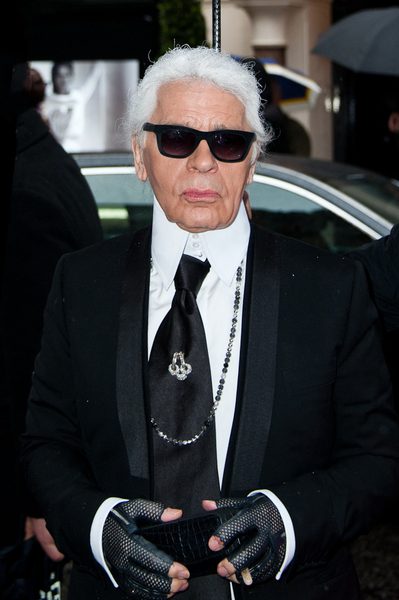
2 brandsBorn in Hamburg in 1933, Karl Lagerfeld won the IWS coat prize in 1954 (against the young Yves Saint Laurent) and joined Pierre Balmain, then Jean Patou. In 1965 Fendi hired him as creative consultant — a relationship that lasted 54 years and gave the Roman fur house its double-F monogram and the Baguette legacy. In 1983 Chanel recruited him to revive Gabrielle Chanel's dormant maison; over 36 years he turned the brand into the largest couture house in the world while staging spectacle-scale shows at the Grand Palais. He also led his own line Karl Lagerfeld and designed for Chloé in two stints (1964-83, 1992-97). One of the most prolific designers in history, he died in Paris in February 2019 still in his Chanel and Fendi posts, becoming a posthumous icon of the white-collar-and-ponytail silhouette.
Keizo Shimizu
2 brandsA Tokyo buyer turned designer, Keizo Shimizu founded Nepenthes in 1988 as an importer of Americana and outdoor clothing for the Japanese market, opening Nepenthes New York in 1989 to source vintage and craft goods at the source. From this platform he launched South2 West8 in 1996, a fly-fishing and outdoor label rooted in Western American river culture, followed by Needles, his signature label built around track pants, rebuilt vintage and the now-iconic butterfly logo. Through Nepenthes' Tokyo, London and New York stores he has nurtured a wider family of in-house lines including Engineered Garments under Daiki Suzuki, and is widely credited as one of the central figures shaping the contemporary Japanese reading of American workwear and outdoor clothing.
Kihachiro Onitsuka
2 brandsBorn in Tottori Prefecture in 1918, Kihachiro Onitsuka founded Onitsuka Shokai in Kobe in 1949 to make basketball shoes for postwar Japanese youth, a project he expanded into a full athletic footwear company. His designs introduced the suction-cup sole and the Mexico 66 silhouette, the latter created for the 1968 Mexico Olympics and bearing the now-iconic crossed stripes. In 1977 Onitsuka Tiger merged with GTO and JELENK to form Asics, an acronym for the Latin anima sana in corpore sano; the Onitsuka Tiger name was later revived in 2002 as a heritage lifestyle line. He led Asics for decades and is remembered as the founding figure of modern Japanese athletic footwear.
Kiko Kostadinov
2 brandsBorn in Sofia and raised partly in London, Kiko Kostadinov graduated from Central Saint Martins' MA Fashion course in 2016 with a workwear-rooted collection that drew immediate attention. He launched his eponymous menswear label the same year and has since built it into one of London's most distinctive technical-tailoring houses, with womenswear designed by Laura and Deanna Fanning added in 2018. He has held creative roles at Mackintosh 0001 and produced influential collaborations with Asics, including the Gel-Burz and Gel-Sokat. In parallel he was a founding member of the London label AFFXWRKS, contributing to its early collections of utilitarian uniform-inspired clothing.
Marc Jacobs
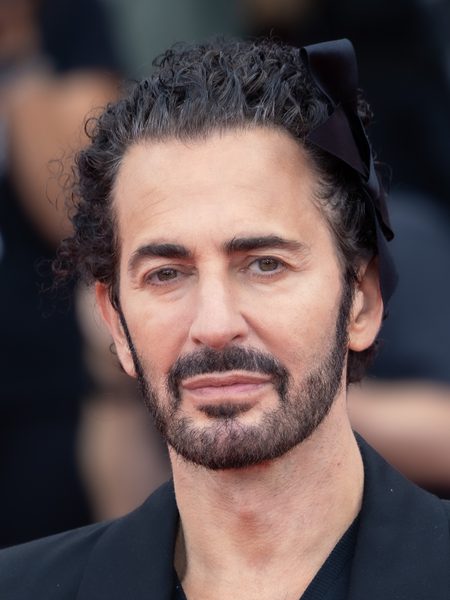
2 brandsBorn in New York City, Marc Jacobs graduated from Parsons in 1984 and launched his eponymous label in 1986. His infamous 1992 'grunge' collection for Perry Ellis got him fired but cemented his cultural authority. In 1997 LVMH installed him as the first creative director of Louis Vuitton's ready-to-wear, where for sixteen years he turned the monogram trunk-maker into a fashion house — collaborations with Stephen Sprouse, Takashi Murakami and Richard Prince, the Speedy graffiti bag, the brand's catwalk debut. He left Vuitton in 2013 to focus on Marc Jacobs and the diffusion line Marc by Marc Jacobs. The eponymous house remains a fixture of New York Fashion Week, and Jacobs himself is a five-time CFDA Designer of the Year.
Margaret Howell
2 brandsBorn in Surrey in 1946, Margaret Howell studied fine art at Goldsmiths before turning to fashion in the late 1960s, initially producing handmade accessories sold through Browns in London. She launched her menswear shirt line in 1972 and her womenswear collection in 1980, building a quietly radical practice centred on British workwear, military cloth, fisherman's smocks and the unforced tailoring of an Oxford button-down. The label has long maintained its own UK-made supply chain, with a flagship on Wigmore Street in London. In Japan, she developed the more relaxed MHL diffusion line in collaboration with her long-term Japanese partner Anglobal, with its dedicated MHL Tokyo store anchoring the line locally.
Matthieu Blazy
2 brandsBorn to French parents in Paris and raised between France and Belgium, Matthieu Blazy graduated from Brussels's La Cambre in 2007. He cut his teeth at Raf Simons, Maison Margiela (couture under John Galliano), and Calvin Klein 205W39NYC under Simons. Daniel Lee brought him into Bottega Veneta as ready-to-wear director in 2020, and Kering elevated him to creative director in November 2021. His three-year Bottega tenure became one of the most quietly influential of the decade — trompe-l'œil leather jeans, the Andiamo bag, hand-knotted Intrecciato evening dresses — earning him the Designer of the Year award at the British Fashion Awards 2023. In December 2024 Chanel announced Blazy as its new artistic director, succeeding Virginie Viard; he begins showing in 2025 as only the fourth head designer in the maison's history.
Michael Drake
2 brandsA self-taught textile designer who built his career in the British accessories trade, Michael Drake co-founded Drake's in London's Haberdasher Street in 1977 with Isabel Dickson, initially specialising in printed silk scarves and ties for export to Italy, Japan and the United States. Under his direction the workshop developed a reputation for hand-frayed cashmere scarves and English-made ties supplying many of the world's leading luxury houses on a white-label basis. He retired from the business in 2010, by which point Drake's had begun selling under its own name and was expanding from accessories into shirting, tailoring and the full ready-to-wear programme later anchored by the Mayfair flagship.
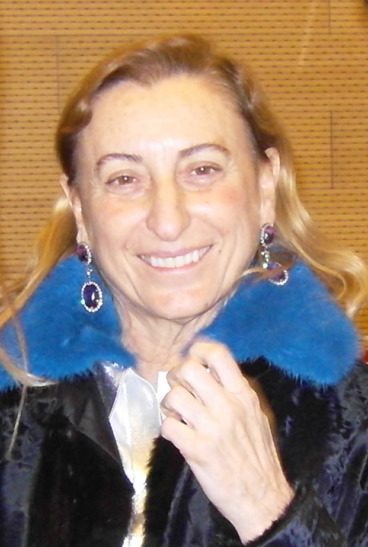
Miuccia Prada
2 brandsBorn in Milan in 1949 to the family behind a century-old leather goods house, Miuccia Prada earned a PhD in political science and trained as a mime before taking over Prada in 1978. Her 1985 black nylon Pocone backpack rewrote luxury's relationship with industrial materials, and her cerebral, deliberately 'ugly chic' womenswear of the 1990s redefined what intellectual fashion could look like. She founded Miu Miu in 1993 as a more impulsive, youthful counterpoint, and established the Fondazione Prada as a contemporary art platform with husband Patrizio Bertelli. Since 2020 she has shared Prada's creative direction with Raf Simons in a dialogue-driven partnership, while Miu Miu under her sole authorship has become the most discussed house of the decade.
Naoki Otsuka
2 brandsBorn in 1969 and a fixture of the Ura-Harajuku generation, Hirofumi Kiyonaga's contemporary Naoki Ōtsuka founded Soph. in 1998, positioning the brand between Japanese sartorialism and sport. In 1999 he launched F.C. Real Bristol as Soph.'s football-club alter ego, distilling kit codes — training jerseys, tracksuits, ball-touch shorts, emblem patches — into a wardrobe that helped invent the contemporary 'sport-luxe' genre well before global luxury caught up. Through long-standing partnerships with Nike, New Era, and seasonal collaborators ranging from Beams to Stüssy, F.C.R.B. became a perennial reference for football-influenced streetwear and an anchor of Tokyo's terrace style. He continues to direct both Soph. and F.C.R.B. from Tokyo as founder and chief designer.
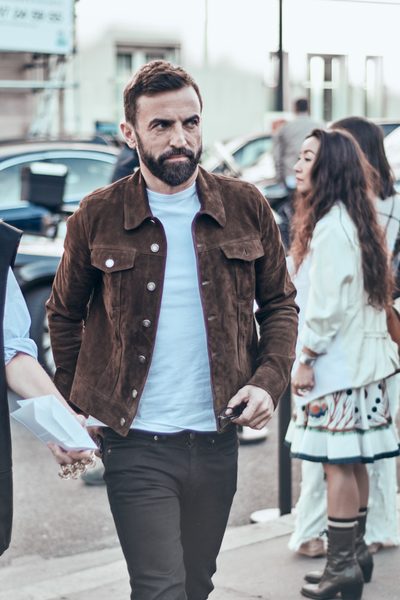
Nicolas Ghesquière
2 brandsBorn in Comines in 1971 and raised in Loudun, Nicolas Ghesquière interned at agnès b. and Corinne Cobson before joining Jean Paul Gaultier, then took over Balenciaga in 1997 at just twenty-five. Over fifteen years he turned the dormant Cristóbal house into the late-1990s and 2000s axis of forward fashion, fusing futurist tailoring, Lego-tab Lariat motorcycle bags, and sci-fi silhouettes into a defining aesthetic of the era. After leaving Balenciaga in 2012, he was named artistic director of Louis Vuitton womenswear in 2013, where he has built a long-running vocabulary of A-line minis, varsity outerwear, and screen-saturated set pieces with house ambassadors. His Louis Vuitton contract was extended in 2024 to anchor the house's next chapter.
Peter Askulv
2 brandsA trained biologist and chemist specialising in plant physiology, Peter Askulv is an avid ice climber and cave diver whose interest in technical equipment began on paternity leave, when he started sewing backpacks for friends. He formally founded Klättermusen in 1984 in Åre, Sweden, the idea conceived years earlier around a Norwegian campfire after a caving expedition. He took an unusually scientific approach for an outdoor brand — working at a microscope to study fabric structure and thread durability — and built Klättermusen's reputation on PFAS-free, environmentally engineered mountain garments. With his wife Eva he steered the brand to a quiet cult following across Scandinavia, Europe and Asia.

Phoebe Philo
2 brandsBorn in Paris to British parents and raised in London, Phoebe Philo studied at Central Saint Martins. She joined Chloé in 1997 under Stella McCartney and succeeded her as creative director in 2001, defining the house's bohemian Paddington-bag era through 2006. After a sabbatical, Philo took the helm at Céline in 2008 and produced a decade-defining minimalist canon — slouchy tailoring, sculpted accessories, the Luggage and Trio bags — that reshaped quiet luxury for a generation. She departed Céline in 2017 ahead of Hedi Slimane's arrival. In 2023 she launched her eponymous brand Phoebe Philo, a direct-to-consumer house that sold out instantly and confirmed her status as one of the most-imitated designers of the 21st century.
Rei Kawakubo
2 brandsBorn in Tokyo in 1942, Rei Kawakubo studied art and literature at Keio University, never receiving formal fashion training. She worked in a textile mill, then as a freelance stylist, before founding Comme des Garçons — French for like boys — in Tokyo in 1969 and opening her first store in 1973. Her 1981 Paris debut alongside Yohji Yamamoto introduced an oversized, asymmetric, black-dominated language that critics dubbed Hiroshima chic and that fundamentally reset Western fashion. Beyond the runway she built an empire spanning COMME des GARÇONS SHIRT, Play, the Junya Watanabe and Tao lines, and Dover Street Market. In 2017 the Metropolitan Museum honoured her with only its second monographic show for a living designer.
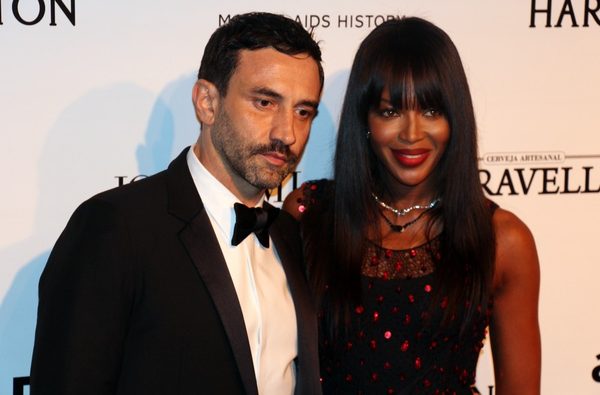
Riccardo Tisci
2 brandsBorn in Taranto in 1974, the youngest of nine raised by a single mother, Riccardo Tisci graduated from Central Saint Martins in 1999 before launching his own label and joining Ruffo Research. Appointed creative director of Givenchy in 2005, he stitched gothic Catholic romance, Rottweiler and shark prints, and couture-grade tailoring into the streetwear conversation, and was instrumental in dressing Kim Kardashian and Kanye West during the late-2000s celebrity culture pivot. After leaving Givenchy in 2017, he was named chief creative officer of Burberry in 2018, where he rebuilt the logo system with Peter Saville and reframed British heritage through a hybrid streetwear-luxury lens until 2022. He continues to work on collaborations and independent projects.
Richard Novak
2 brandsA lifelong surfer from Santa Cruz, California, Richard Novak co-founded NHS in 1973 with friends Doug Haut and Jay Shuirman — the company's name an acronym of their surnames. Originally a fibreglass supplier to surfboard shops and boat builders, NHS pivoted into skateboards the same year on a 500-deck commission from a Hawaiian friend, producing the first Santa Cruz Skateboards from leftover materials. Novak went on to license and distribute Independent Trucks (1978) and to incubate Powell-Peralta-era graphics-heavy decks, making NHS the world's longest-running skateboard manufacturer. He was inducted into the Skateboarding Hall of Fame in 2020.
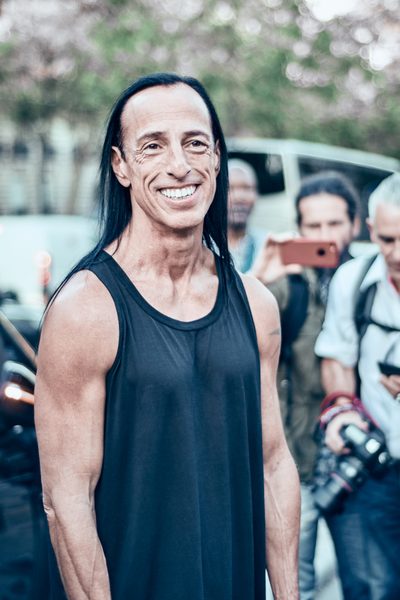
Rick Owens
2 brandsRichard Saturnino Owens was born in Porterville, California in 1961 to a Mexican mother and conservative Catholic American father. He left for Los Angeles to study at Otis College of Art and Design, then trained in pattern-making at LA Trade-Tech before working in the garment district producing knock-offs of designer clothing. In 1994 he launched his own label out of a Hollywood Boulevard shop; by the early 2000s he had relocated to Paris and become one of the defining figures of post-grunge luxury, dressing his audience in elongated, drape-heavy, monochrome silhouettes. He introduced DRKSHDW in 2005 as a denim and jersey-based diffusion line, and now oversees a constellation including Rick Owens, DRKSHDW, Lilies and Hun, alongside collaborations with Birkenstock, Veja, Moncler, Champion, Dr. Martens and Converse.
Rihachi Mizuno
2 brandsRihachi Mizuno (1884-1970) founded Mizuno Brothers Ltd. in Osaka in 1906 with his younger brother Rizo, originally selling Western sundries including baseballs. Inspired by American baseball culture, he began producing order-made athletic wear in 1907 and renamed the shop Mizuno in 1910, with in-house baseball and glove manufacturing from 1913. He went on to introduce Japan's first domestically made golf clubs in 1933 under the Star Line. Beyond product, Mizuno organised baseball tournaments and championed sport as a national project, leaving a sports foundation in his will. He was inducted into the Japanese Baseball Hall of Fame in 1971, a year after his death.
Sabato De Sarno
2 brandsBorn near Naples in Cicciano, Sabato De Sarno trained inside Italian luxury — Prada, Dolce & Gabbana, then more than a decade at Valentino where he rose to fashion director overseeing men's and women's collections under Pierpaolo Piccioli. In January 2023 Kering surprised the industry by naming the relatively low-profile De Sarno creative director of Gucci, succeeding Alessandro Michele's maximalist decade. His debut show in September 2023 introduced a stripped-back, sensual silhouette in his signature 'Rosso Ancora' red — wardrobe basics, mini-shorts, loafers — designed for mainstream commercial appeal. Sales disappointed and Gucci announced his departure in February 2025, before his replacement Demna was announced weeks later. De Sarno's two-year Gucci stint became a study in the limits of quiet luxury at scale.
Scott Sasso
2 brandsA native New Yorker and former graffiti writer, Scott Sasso founded 10.Deep in 1995 while a student at Vassar College, scrawling the name on a piece of notebook paper taped to his dorm wall. Built from screen-printed tees and rooted in NYC hip-hop and skate culture, 10.Deep became one of the foundational US streetwear labels, worn by A$AP Rocky and instrumental in early mixtape releases from Kid Cudi and Wale. Sasso also helped launch urban-wear brands Akademiks (1998) and PRPS (2001), and oversaw a Japan-focused 10.Deep Tokyo capsule, before stepping away from the brand he founded in 2023.
Shangguan Zhe
2 brandsBorn in Quanzhou, Fujian in 1984, Shangguan Zhe studied at Xiamen University before founding Sankuanz in 2013, the menswear label that quickly became one of the most internationally recognised Chinese designer projects of the 2010s. He was a LVMH Prize finalist in 2015 and has shown on the Paris and Milan men's calendars across the past decade, building collections around the visual collisions of Chinese folk religion, internet imagery, sportswear and post-apocalyptic styling. Sankuanz has produced ongoing collaborations with Coca-Cola, Puma and Phenomenon, and Shangguan operates the design practice from its Sankuanz Studio in Xiamen alongside a parallel research and creative direction agenda.
Takahiro Miyashita
2 brandsBorn in Tokyo in 1973, Takahiro Miyashita worked at the Ura-Harajuku vintage store Nepenthes before founding Number (N)ine in 1996, named after a Beatles track. Across more than a decade he turned the label into one of the central voices of post-Undercover Tokyo menswear, weaving Hedi Slimane-era rock silhouettes with Americana, military and grunge references through collections such as Touch Me I'm Sick and Givin' it Away. He closed Number (N)ine in 2009 and relaunched in 2010 as TAKAHIROMIYASHITA TheSoloist, a more solitary, sculptural menswear practice that has since shown on the Paris men's calendar and earned cult status for its layered, narrative-driven runway shows.
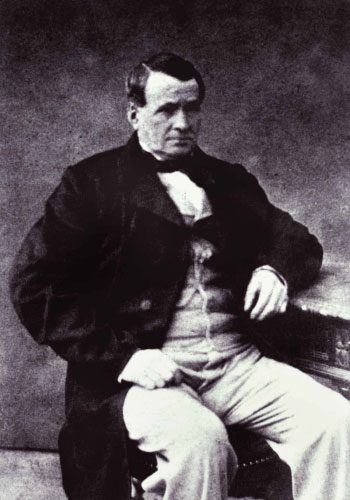
Thierry Hermès
2 brandsBorn in Krefeld in 1801 to a French father and German mother, Thierry Hermès moved to Normandy as a young man to learn harness-making before relocating to Paris in 1837, where he opened a workshop on the Grands Boulevards specialising in harnesses and bridles for the carriage trade. He built the business around the saddle stitch — a hand-finished, two-needle technique still used by the house today — and won recognition at the 1867 Universal Exhibition. His son Charles-Émile and grandson Émile-Maurice extended the leathergoods business into saddlery, then luggage and bags, eventually evolving the workshop into the global luxury maison of Hermès. Thierry died in Neuilly-sur-Seine in 1878.
Ulrik Pedersen
2 brandsCopenhagen-based Ulrik Pedersen co-founded NN.07 (No Nationality 07) in 2007 and over the following decade built it into one of Scandinavia's most commercially successful contemporary menswear labels, defined by a quietly considered take on relaxed Nordic tailoring. In 2018 he partnered with Martin Gjesing of Moon and Swedish designer Bengt Thornefors to launch Sunflower, a more design-driven menswear project led by veterans of Danish tailoring and visual culture. Sunflower's pared-back denim, knitwear and tailoring quickly earned a cult following on Copenhagen Fashion Week and across international independent retail, cementing Pedersen's role as a bridge between mass-market Nordic minimalism and a more curated younger generation.
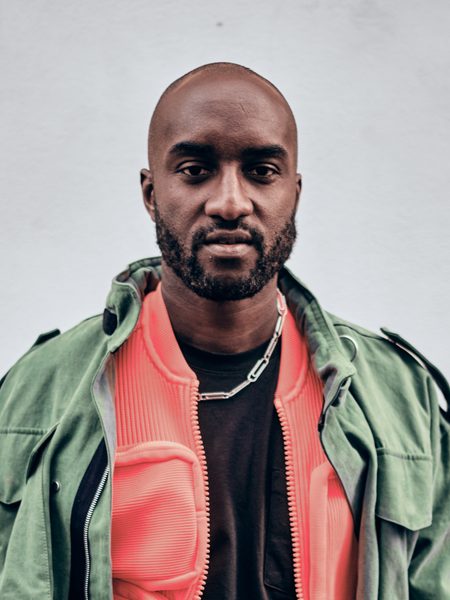
Virgil Abloh
2 brandsBorn in Rockford, Illinois in 1980 to Ghanaian immigrant parents, Virgil Abloh studied civil engineering at the University of Wisconsin and earned a master's in architecture from IIT in 2006. After interning at Fendi with Kanye West he became West's creative director at Donda. He founded Pyrex Vision in 2012, evolving it the following year into the Milan-based Off-White, which translated his architectural and Duchampian ready-made sensibility into screen-printed luxury streetwear. In March 2018 LVMH named him artistic director of Louis Vuitton menswear — the first Black designer to lead the house. He continued at both labels until his death from cardiac angiosarcoma in 2021, reshaping the relationship between streetwear and luxury.
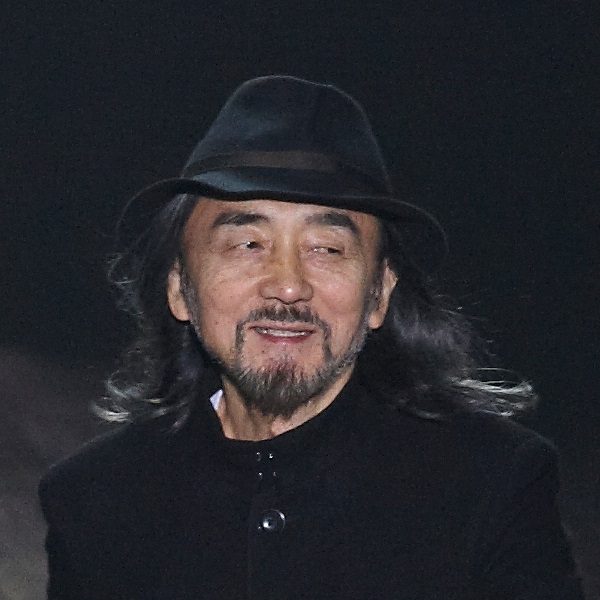
Yohji Yamamoto
2 brandsBorn in Tokyo in 1943 and raised by his widowed dressmaker mother, Yohji Yamamoto studied law at Keio University and then fashion at Bunka Fashion College, graduating in 1969. He launched his women's ready-to-wear company Y's in 1972 and presented his first Yohji Yamamoto collection in Paris in 1981 alongside Rei Kawakubo, an event that reset Western fashion's vocabulary around black, asymmetry, draping and anti-bourgeois tailoring. His menswear line followed in 1984. In 2002 he launched Y-3 with adidas, the first major designer-sportswear collaboration of its kind, fusing his draping with three-stripe athletic codes. He continues to lead Yohji Yamamoto Inc. from Tokyo as one of the most influential figures in postwar fashion.
Yushan Li
2 brandsBorn in China and trained in Milan at Istituto Marangoni, Yushan Li met his design partner Jun Zhou in Italy and co-founded Pronounce in 2016 as a Shanghai- and Milan-based menswear label. The studio has shown on the official Milan and Shanghai men's calendars from its early seasons and weaves Chinese material heritage, including silk damask, ramie and traditional tailoring, into a contemporary sportswear silhouette. Pronounce was named LVMH Prize semi-finalist in 2019 and has produced collaborations with Woolmark, Mulberry and Browns, positioning itself as one of the most internationally visible Chinese menswear projects of its generation, while the parallel Pronounce Studio supports the brand's research and product development.
Abderrahmane Trabsini
1 brandsAbderrahmane Trabsini is the founder/designer behind daily-paper. Detailed biography pending editorial enrichment.
Abraham Feinbloom
1 brandsAbraham Feinbloom is the founder/designer behind champion. Detailed biography pending editorial enrichment.
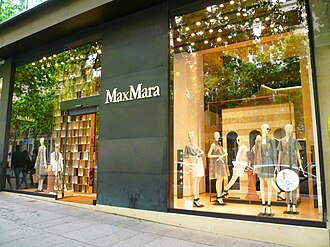
Achille Maramotti
1 brandsMax Mara is an Italian fashion business that markets upscale ready-to-wear clothing. It was established in 1951 in Reggio Emilia by Achille Maramotti. As of October 2024 the company has 502 stores in 69 countries. It sponsors the Max Mara Art Prize for Women.
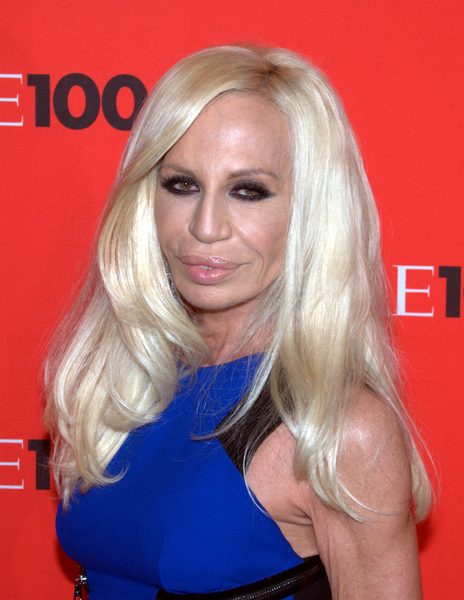
Donatella Versace
1 brandsBorn in Reggio Calabria in 1955, Donatella Versace grew up as muse and confidante to her older brother Gianni, joining the family house in the late 1970s and shaping its accessories, advertising, and Versus diffusion line throughout the 1980s and 90s. When Gianni was murdered in 1997, she stepped into the role of chief creative officer, steering Versace's signature codes — Medusa hardware, baroque prints, second-skin glamour, supermodel theatrics — through three decades of cultural shifts. Under her direction the house re-anchored Hollywood red-carpet dressing, revived the 2017 tribute show with the original supers, and cultivated a new generation of pop ambassadors. In 2025 she handed the creative reins to Dario Vitale while remaining chief brand ambassador.
Jens Grede
1 brandsJens Grede is a Swedish entrepreneur and co-founder of contemporary fashion businesses Frame Denim (with Erik Torstensson, 2012) and Skims (with Kim Kardashian and Emma Grede, 2019). His career spans branding, e-commerce platforms, and direct-to-consumer apparel — Frame established a global premium denim category, while Skims became one of the fastest-growing intimate-wear and ready-to-wear labels of the early 2020s.
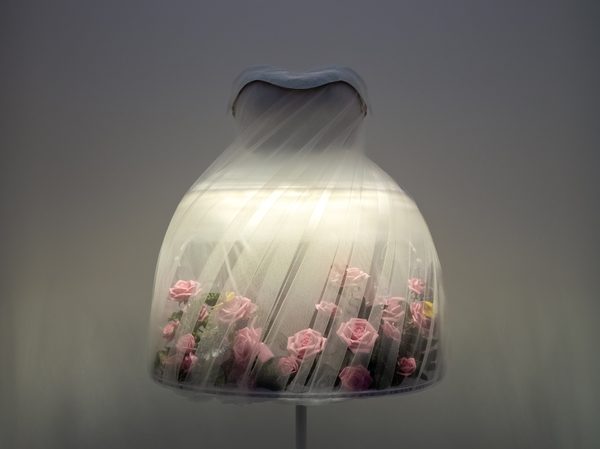
Jun Takahashi
1 brandsBorn in Kiryū, Gunma in 1969, Jun Takahashi co-founded Undercover with Hiroshi Fujiwara's encouragement while still studying at Bunka Fashion College, opening the Nowhere store in Harajuku with friend Nigo in 1993. His early collections fused punk, Dadaist patchwork, and Tokyo street energy under the motto 'We Make Noise, Not Clothes,' before his 2002 Paris debut 'Scab' pushed Undercover into the international avant-garde conversation alongside Rei Kawakubo, who became a key mentor. Across collections like 'Languid' and 'But Beautiful,' he has built a literary, often unsettling vocabulary of grafted garments, theatrical staging, and recurring motifs from Sonic Youth to David Lynch. He continues to lead Undercover from Tokyo and collaborates extensively with Nike, sacai, and Supreme.
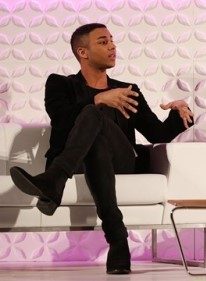
Olivier Rousteing
1 brandsBorn in Bordeaux and adopted as an infant, Olivier Rousteing studied at ESMOD Paris and worked five years at Roberto Cavalli before joining Balmain in 2009. In April 2011, aged 25, he succeeded Christophe Decarnin as creative director — one of the youngest appointments at a Parisian couture house in modern history. Over more than a decade he rebuilt Balmain into a celebrity-and-Instagram-led empire: military-bead embroidered jackets, the #BalmainArmy of Kardashian-Jenner sisters, the 2015 H&M collaboration, sneakers, the resurrection of Balmain couture in 2019, and global hip-hop adoption. Rousteing remains in place and is the longest-tenured creative director among major Paris houses of his generation, having largely defined what celebrity-fashion synergy looks like in the social-media era.
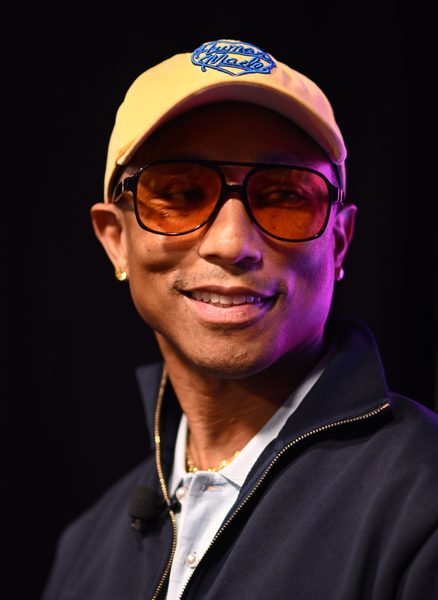
Pharrell Williams
1 brandsVirginia-born musician, producer and entrepreneur Pharrell Williams crossed into fashion in 2003 as co-founder, with Nigo, of Billionaire Boys Club and Ice Cream — early proof that hip-hop, skate and Japanese streetwear could share one brand language. Over the next two decades he collaborated with Louis Vuitton (the 2004 Millionaire sunglasses with Marc Jacobs), Adidas (Hu collection, NMD, Solar Hu), Chanel (the 2019 capsule), G-Star Raw, and Moncler. In February 2023 LVMH appointed him as Louis Vuitton menswear creative director, succeeding Virgil Abloh — his debut on the Pont Neuf in June 2023 attracted Beyoncé, Jay-Z and Rihanna and signalled luxury's full embrace of the artist-as-designer model. He remains in the role as one of the highest-profile non-trained-designer CDs of a major Paris house.
Pieter Mulier
1 brandsBelgian designer Pieter Mulier graduated from Antwerp's Royal Academy and spent fifteen years as Raf Simons's right hand — first at Jil Sander, then at Dior, and most prominently as design vice president of Calvin Klein 205W39NYC under the Simons era. After Simons's CK exit, Mulier was named creative director of Alaïa in 2021, becoming the first to lead Azzedine Alaïa's couture house after the founder's death. His Alaïa, debuted in a January 2022 Paris show, refocused the house on sculptural body-conscious cuts, hooded knit dresses and the viral mesh ballet flat — winning him near-unanimous critical acclaim and confirming a long-overdue solo voice within the Richemont stable.
Shinsuke Takizawa
1 brandsBorn in Tokyo in 1965, Shinsuke Takizawa came of age in the early-1980s Harajuku biker and rock subcultures and worked at the Hollywood Ranch Market and the seminal store AAPE/Hectic before founding Neighborhood in 1994. Built around motorcycle culture, military surplus, and Americana filtered through a Japanese collector's lens, Neighborhood became a cornerstone of the Ura-Harajuku movement alongside friends Hiroshi Fujiwara, Nigo, and Jun Takahashi. His M-65 fishtail parkas, savage denim, and skull-and-spanner graphics established a vocabulary that has since influenced two generations of streetwear, and the brand's recurring collaborations with adidas, Converse, Porter, and Dr. Martens have kept it culturally central. He continues to lead Neighborhood from Tokyo as founder and creative director.
Tetsu Nishiyama
1 brandsBorn in 1969 and active in the Ura-Harajuku scene of the early 1990s, Tetsu Nishiyama — known by the initials TET — co-founded the Forty Percent Against Rights (FPAR) and Wtaps imprints in 1996 after time spent skating and absorbing American military and workwear codes. Wtaps grew out of his obsession with reissuing and reinterpreting utility garments: M-65 jackets, BDU trousers, deck shirts and tonal logo caps recoded as graphic, contemplative streetwear under the maxim 'putting things in their proper place.' Operating from Tokyo with a deliberately low public profile, he has become one of the foundational figures of Japanese militaria streetwear, with longstanding collaborations with Vans, New Balance, Porter, and Neighborhood's Shinsuke Takizawa. He continues to direct every season of Wtaps personally.